Should Your Author Website Be Named After You, or Your Book?

This is a question I hear surprisingly often from writers—especially those publishing their first book. When you're pouring your heart, time, and energy into a debut, it’s completely natural to think, Surely my book deserves its own website!
But in most cases, the wisest long-term strategy is simple:
Brand you, the author, not the book.
Why your author name matters more than any single title
A book is a product. It has a lifecycle: launch, promotion, a gradual tapering, and eventually a place in your backlist.
But you are the brand.
Your name carries forward to your next book, your speaking engagements, your consulting offers, or whatever else you create. Keeping your website anchored to your author identity makes your platform durable and flexible.
If you build your web presence around a single title—especially a debut—you risk boxing yourself in before your writing career really takes shape.
I’ve worked with many authors who started with one book idea, only to pivot later on. Genres evolve, brand messages mature, and new opportunities appear. Your website should support that growth rather than limit it.
But what about my exciting debut?!
I say this with total empathy, because I fell into this myself.
When I published my first novel, Saving Saffron Sweeting, I was so smitten with my fictional English village that I naturally bought the domain savingsaffronsweeting.com. I still maintain that site for my fiction world today, although I’m not sure I’d choose it again, especially if I had foreseen having to say it out loud on a podcast :)
And if I had stayed focused on writing full-time—and not shifted to website design—my main home online would absolutely have been paulinewiles.com. Even as a novelist, centering everything under your author name makes it easier for readers to find you and follow your entire body of work.
This doesn’t mean your debut book title isn’t important on your site. You can—and should—feature it prominently on many (most?) pages. But your domain name is best kept closely linked to you.
What if a book-specific domain still feels important?
There are times when registering a book title can still be useful:
You want to prevent anyone else from snapping up the URL
You plan to use it for marketing campaigns or redirects
You like having it printed in the book for easy typing
You have a series with strong, recognizable branding
Like many of us, you still harbor secret dreams that Netflix or Universal Pictures might come knocking :)
But here’s the trick: Your book domain doesn’t have to become its own full website.
A simple redirect works beautifully.
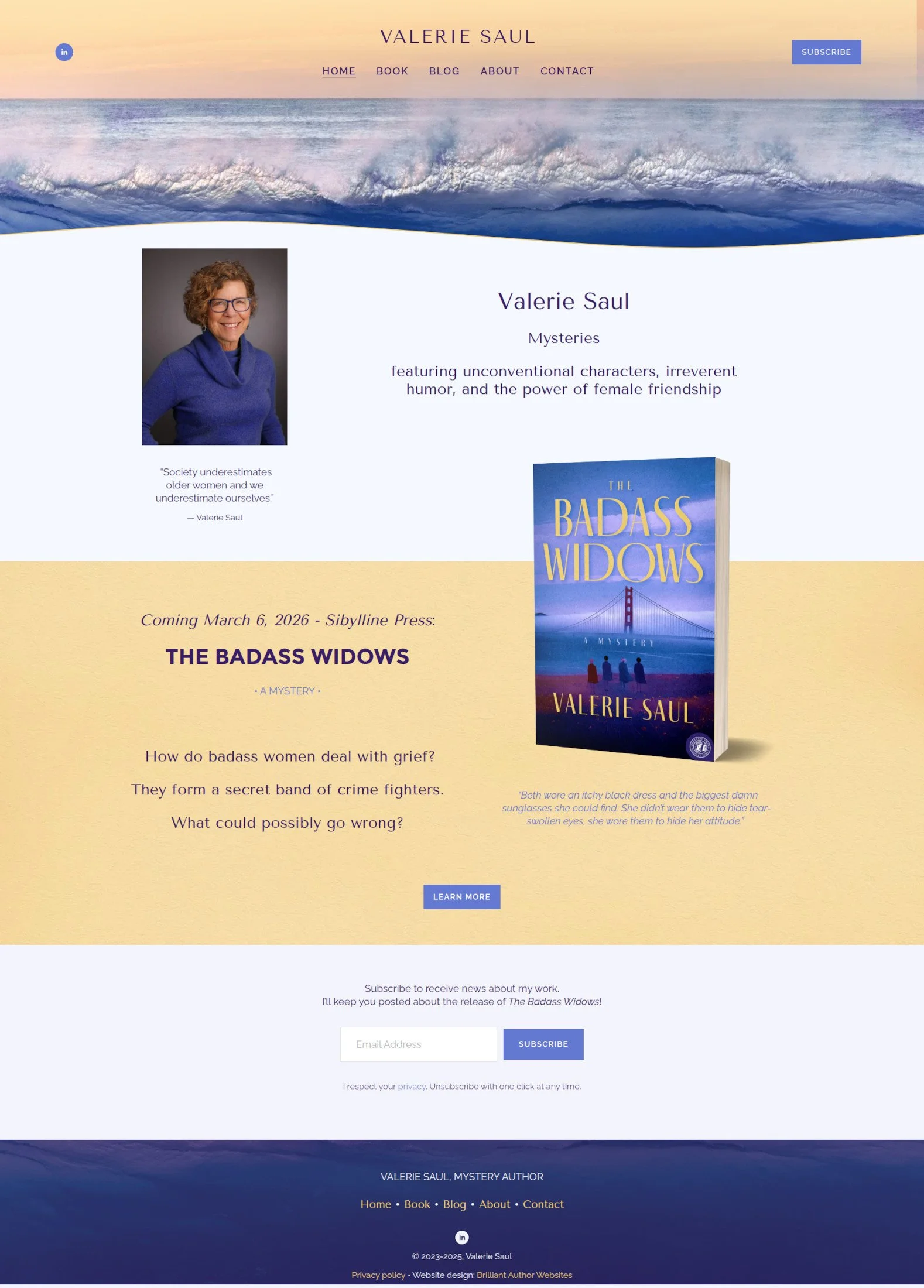
A great example is one of my clients, Valerie Saul.
When she wrote her debut mystery The Badass Widows, she wisely bought thebadasswidows.com—but instead of building a second, separate website, we simply pointed it to her main home at valeriesaul.com. Clean, flexible, and future-proof.
Why a single author site is almost always better
Here are the advantages of keeping everything under your name:
You grow one website—not two or more
More efficient to maintain, update, and improve in the long run
Search engines understand who you are … over time, Google begins to associate your name with your niche, topics, and books
New books integrate seamlessly (no years of domain-collecting, juggling multiple sites, or starting from scratch!)
Your author brand stays consistent, even if you write multiple books and/or explore different genres
If you’re an author-speaker, author-consultant, or author-educator (as many nonfiction writers are), your own name is unquestionably the stronger brand.
And, my favorite: readers know where to find you, regardless of which book brought them in
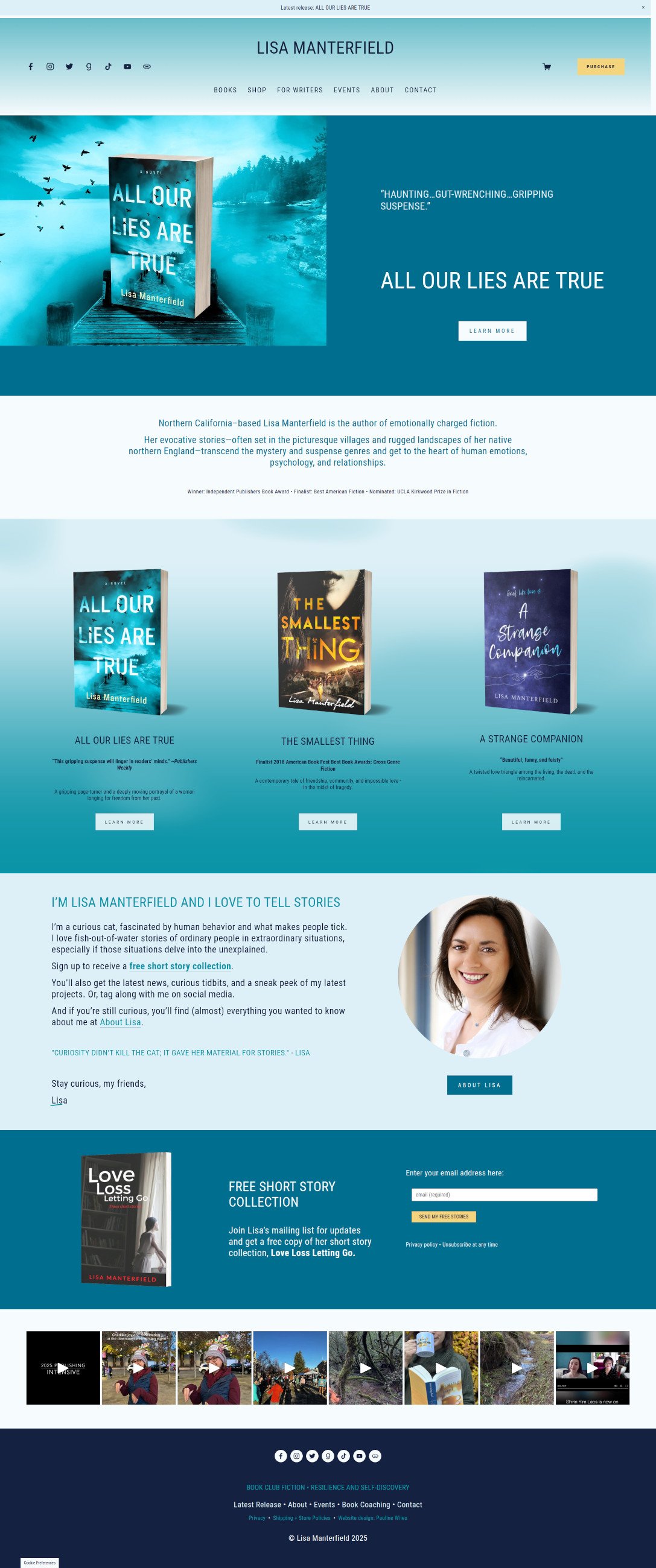
Here’s another client example: Lisa Manterfield writes in different genres, offers book coaching, and speaks at writing events. Using her name as her overall brand is perfect.
If your name is common or already taken as a domain, I'd suggest slight variations like adding 'author' or your genre, for example, janedoeauthor.com or janedoemystery.com. The goal is to make it memorable and meaningful.
Related: Author Website Domain Name Tips
Bottom line
By all means, buy the book domain if it brings you joy or gives you marketing flexibility. I’ve done it myself, and many of my clients do too.
But when it comes to your primary website name—the one you update, maintain, and share widely—choose the one thing that will grow with you:
Your author name.
•
Are you ready for a professional author platform?
If you’re feeling unsure about how your author brand fits together—your domain name, your website structure, or how to present your books in a way that supports the future of your writing career—this is exactly the kind of thing we dive into in an Author Website Clarity Call.
It’s a focused, one-to-one strategy session where we cut through the overwhelm of website decisions and author tool options with a focused session, tailored to your publishing goals.
👉 Learn more or book your Clarity Call here:
Popular resources for your author website and domain name
Save 10% off your first subscription for a Squarespace website by using the code PAULINE10
This article contains affiliate links. I only recommend products and services that I love, and I may earn a small commission if you purchase through one of my links. But you don’t pay any extra.