When you're writing memoir, you are part of the story.
Unlike novelists, who can let fictional worlds take center stage, memoir authors need readers to connect with the person behind the book. Readers aren't just buying a story—they're investing in a perspective, a lived experience, and often a message they need to hear.
That's why memoir author websites require a slightly different approach.
Recently, I had the pleasure of creating a website for author Jasper Cove.
After publishing my interview with Jasper about his writing process and motivation, I thought it would be interesting to take you behind the scenes of the website itself.
Let's look at a few of the strategic choices we made—and why they matter for memoir authors.
Video Tour:
I’m experimenting today with a video tour. You can either read about this memoir website below, or watch this 6-minute video where I show you some of the key pages and discuss why we added certain features.
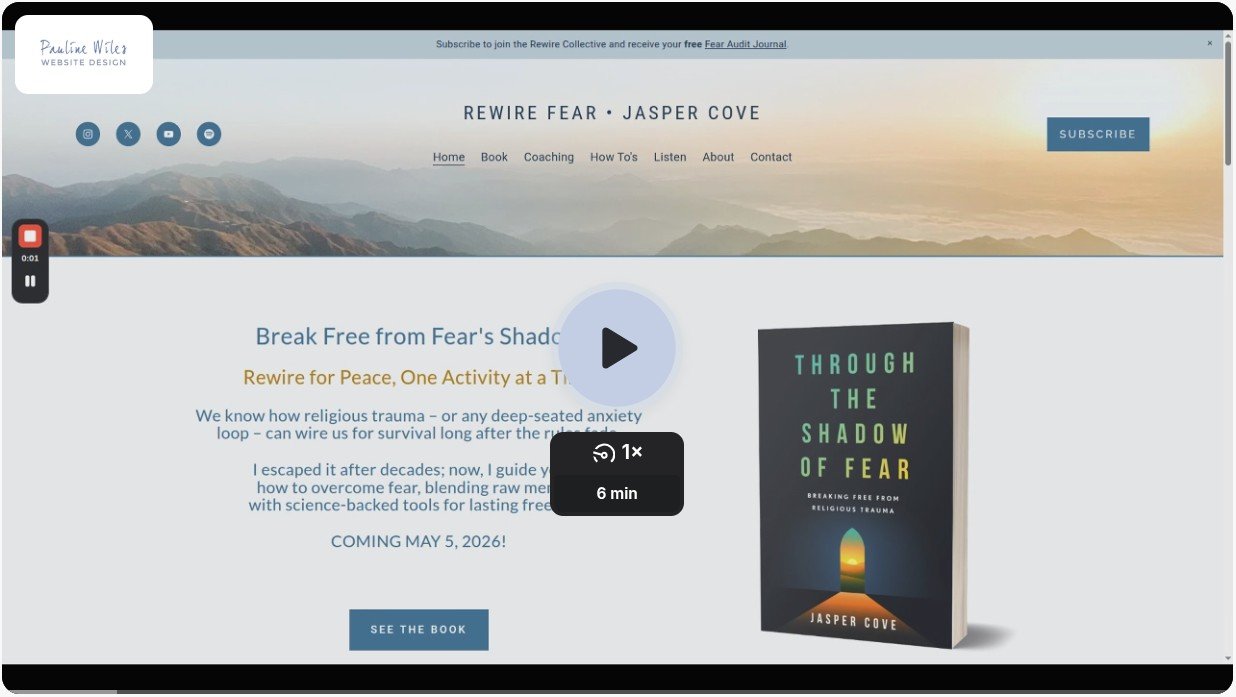
6-minute video tour: you may need to click to unmute
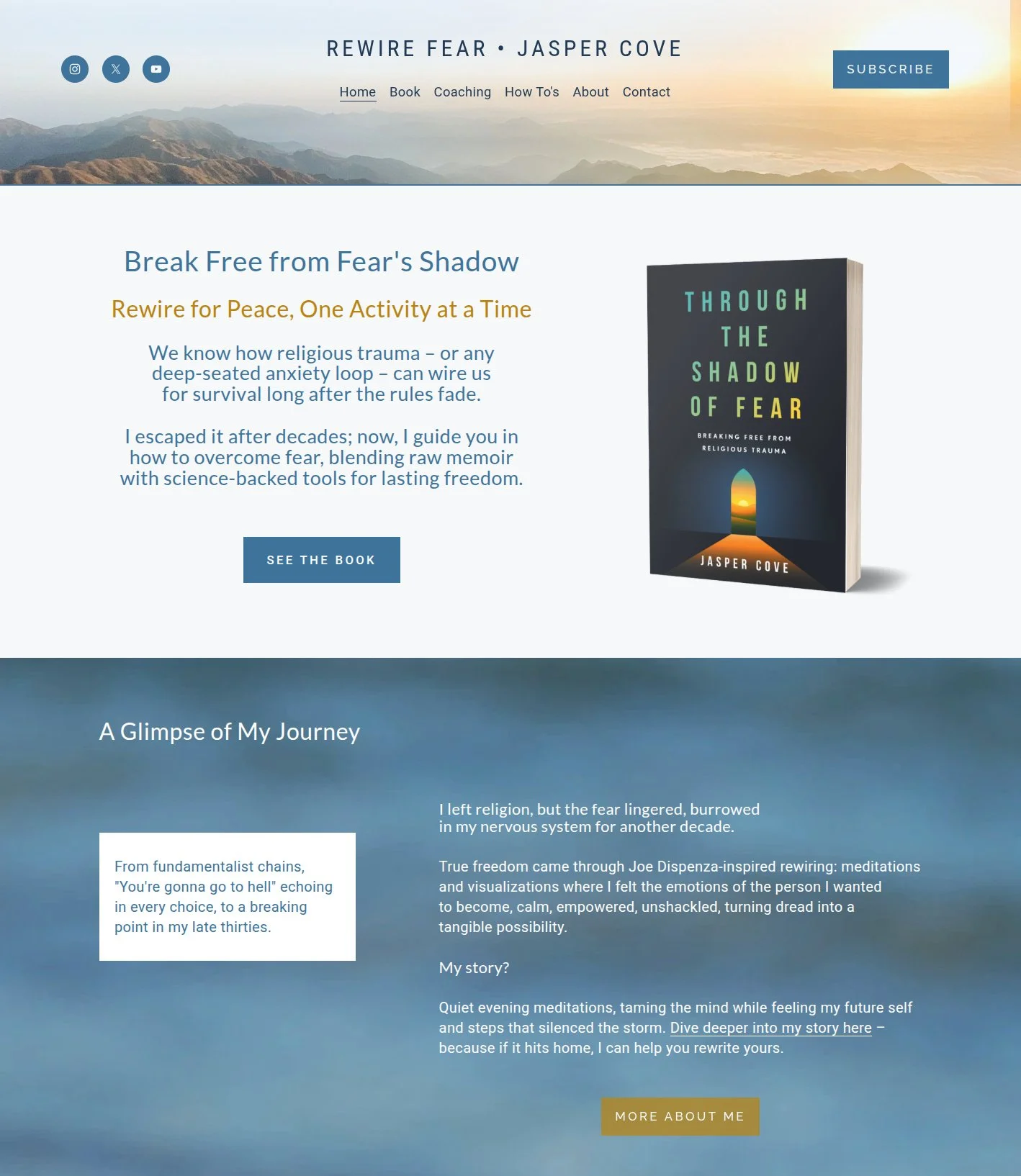
First Impressions: Establishing the Big Idea
One of the first questions I ask every author is:
What do you want visitors to understand, within the first few seconds?
For memoir authors, that answer is often bigger than the book itself.
Jasper's memoir explores fear, trauma, and personal transformation. The Home page immediately communicates the central idea behind his work.
Visitors quickly understand:
What the book is about
Who it's for
What their next step might be, including coaching support from Jasper.
The Book Gets a Dedicated Home
[see below]
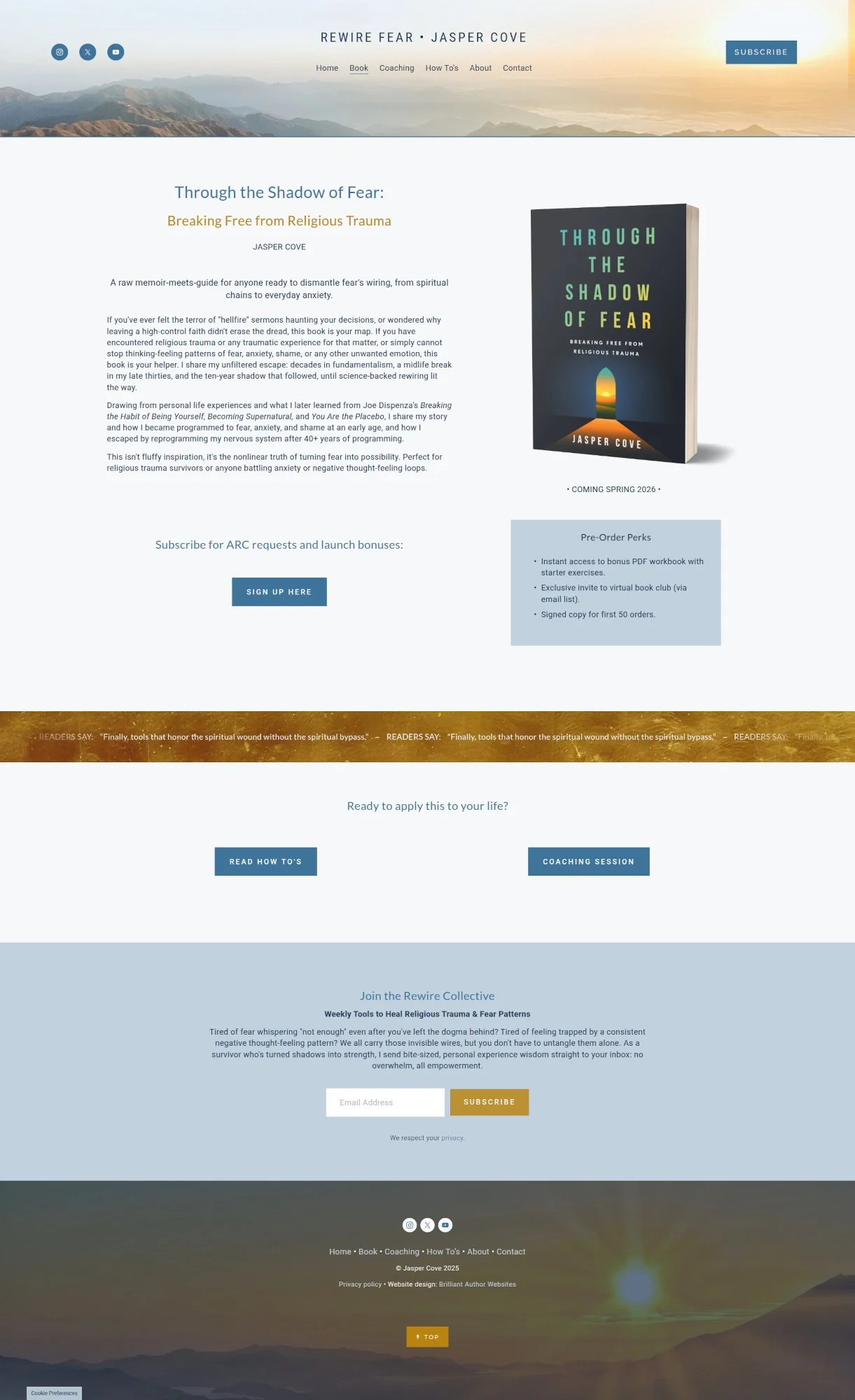
Some author websites tuck book information into a general "Books" page, and frankly, when you have multiple titles, this may become necessary.
But for memoir authors with a flagship title, I recommend a dedicated Book page instead.
This creates space for:
The book description
Endorsements and reviews
Purchase links
Next steps.
A memoir is frequently the centerpiece of your author platform, so it deserves room to breathe.
The About Page Builds Trust
[see above]
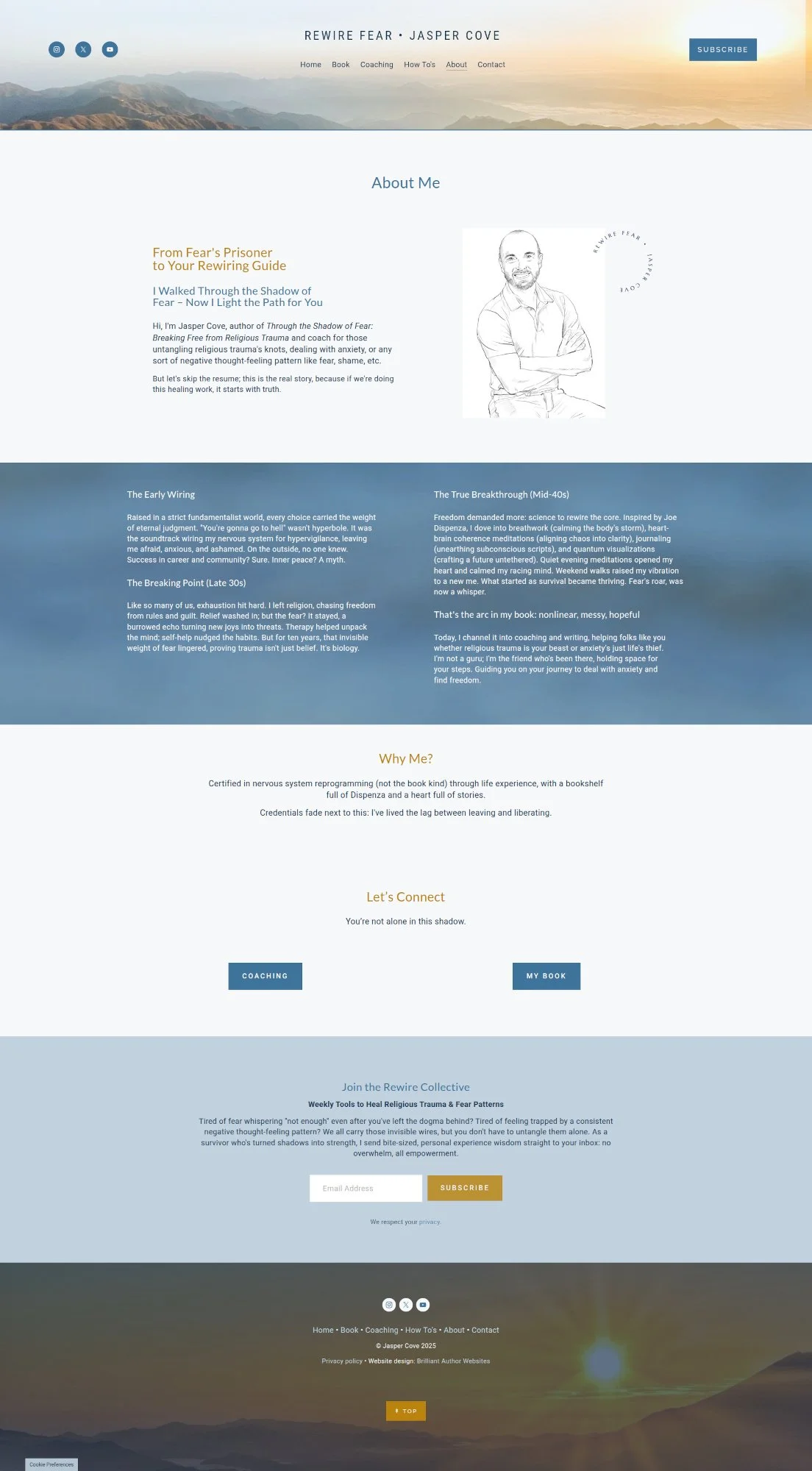
Memoir readers are deeply interested in who they're spending time with.
The About page isn't a résumé; it’s an opportunity to deepen the connection. Jasper does an excellent job of briefly describing his early wiring, breaking point, and breakthrough. This all establishes credibility and context.
The strongest About pages for memoir authors answer a simpler question:
Why should this reader trust me to guide them through this topic?
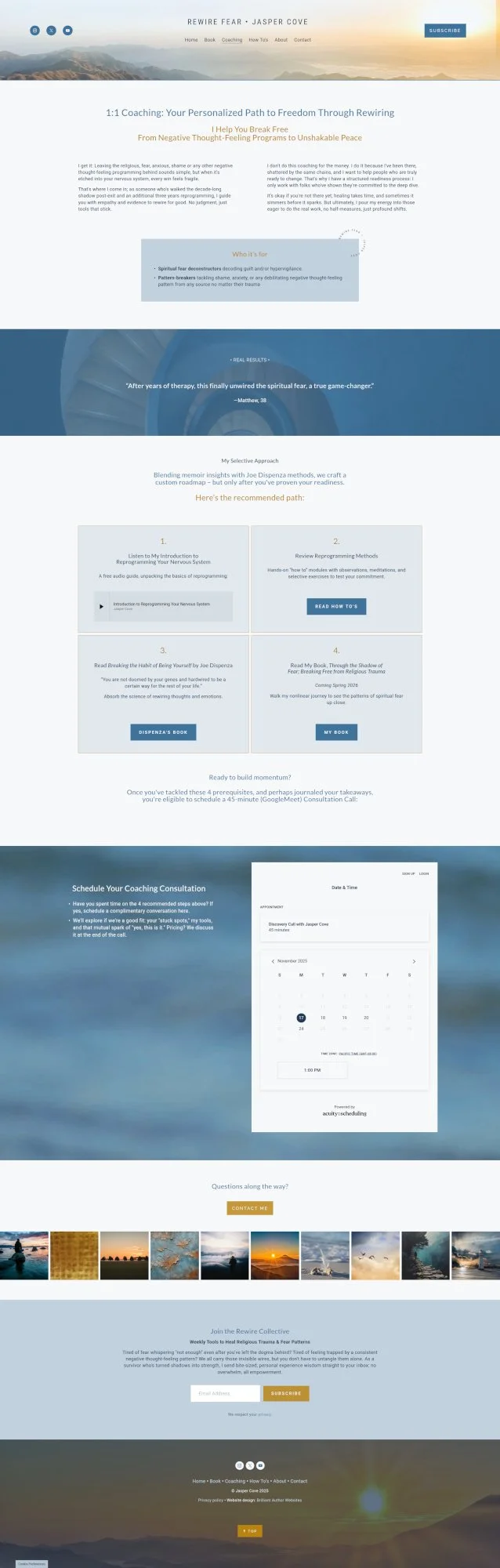
Coaching for Those Who Are Ready
[see below]
Many memoir authors have expertise that extends beyond the page.
Sometimes that's consulting, coaching, speaking, teaching, workshops, retreats, or professional services connected to the themes of the book.
In Jasper's case, his memoir explores fear, religious trauma, and the process of personal transformation.
The Coaching page gives readers a way to continue that journey with him. Rather than presenting coaching as a separate business, it feels like a natural extension of the story and lessons in the book.
What I particularly like about this page is that it doesn't immediately jump to "Book a call."
Instead, it explains who the coaching is for, shares testimonials, outlines Jasper's philosophy, and walks visitors through a readiness process before inviting them to schedule a consultation. That helps prospective clients understand both the commitment involved and whether they're a good fit.
Then, when they’re ready, there is a calendar embedded on the website so they can schedule the conversation without lots of email back-and-forth.
This is something I often discuss with nonfiction and memoir authors:
A website can do far more than sell books. It can support the wider work you're called to do, whether that's coaching, consulting, speaking, teaching, or building a community around your message.
For authors whose books are rooted in lived experience, those opportunities often become an important part of their platform.
The How To's Turn Expertise Into Discoverability
[see above]
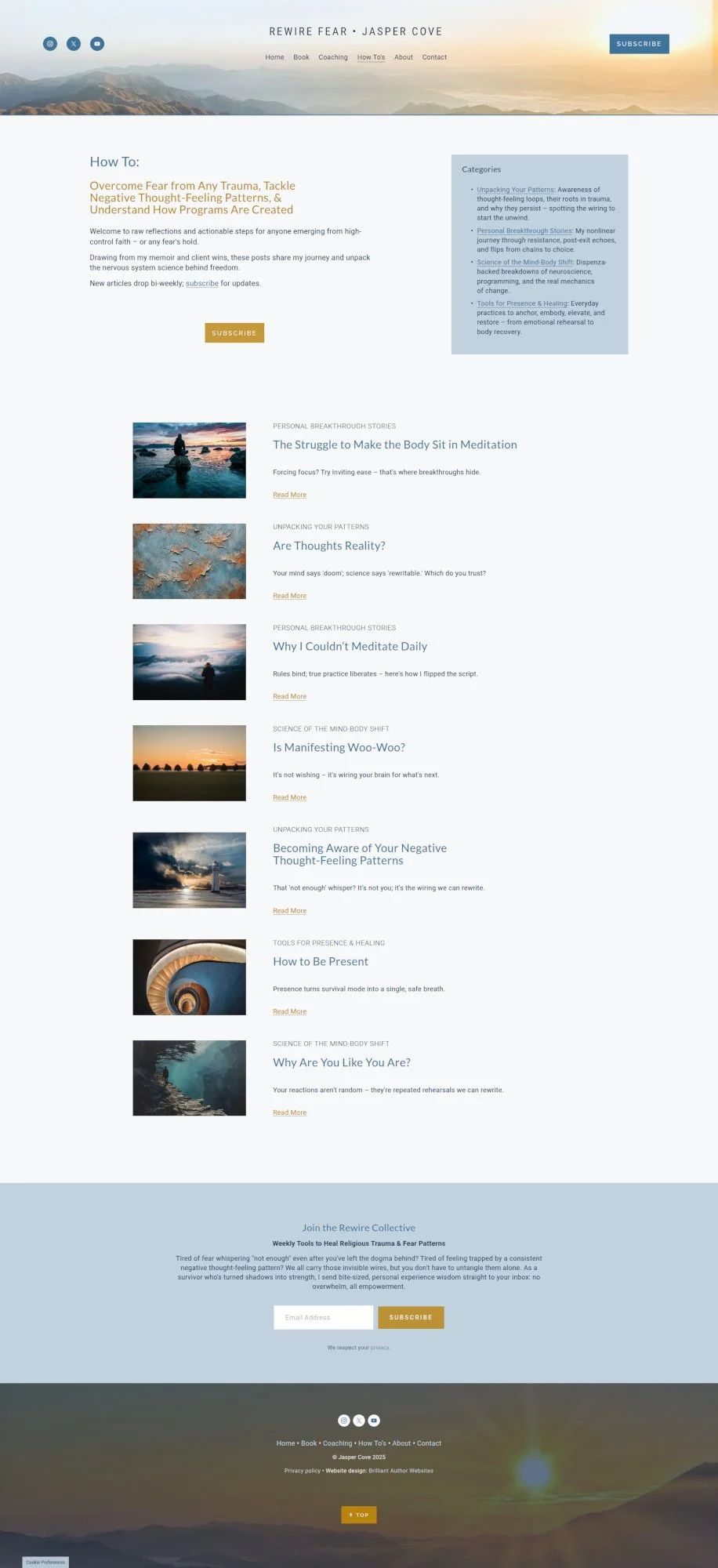
One of the smartest features on Jasper's website isn't directly about the book at all.
His How To's provide practical guidance on topics related to the themes of his work, including fear, personal growth, and life transitions. This genuinely helpful content serves his audience, whether or not they’ve read the book.
For the website, these articles serve another important purpose: they help new visitors discover Jasper's work through search engines and shared links. Many writers think of their website primarily as a place to display information about their books. But a website can also be a publishing platform in its own right.
Articles, essays, guides, and resources allow authors to:
Demonstrate expertise and credibility
Answer questions readers are already asking
Attract new visitors through search
Build trust
Create natural pathways into future books, newsletters, or services
Jasper's How To's are a good example of that approach in action. They're useful on their own, while also introducing readers to the broader message behind his work.
Multiple Ways to Engage With the Message
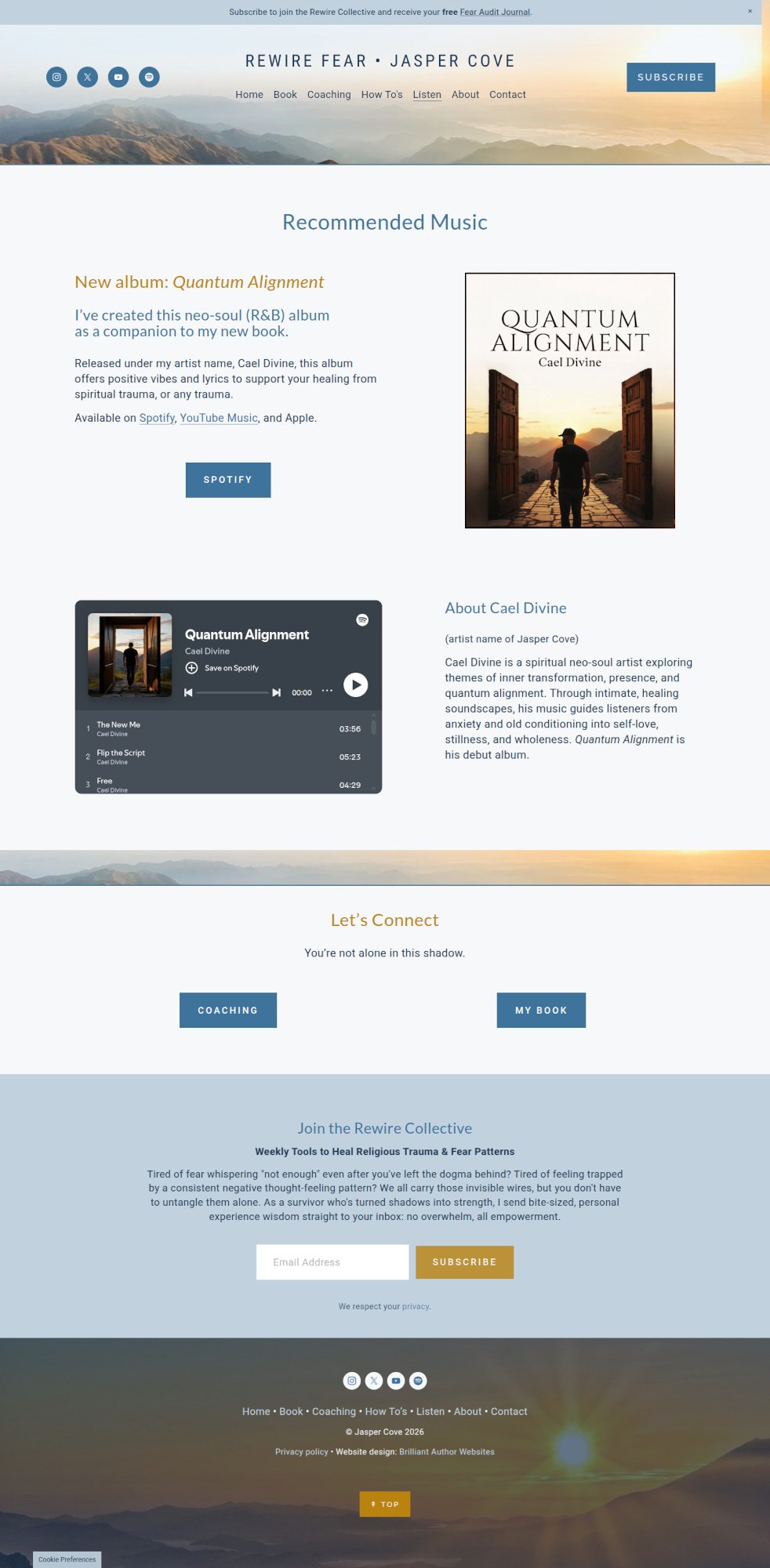
One of my favorite surprises on Jasper's website is the Listen page!
Alongside his memoir and coaching work, Jasper has also created a music album under the artist name Cael Divine. The songs explore some of the same themes found throughout his writing: fear, healing, transformation, and personal growth.
From a website strategy perspective, I think this is a fascinating example of “meeting people where they are.”
Not everyone connects most deeply through books. Some people prefer podcasts. Others are drawn to music, videos, conversations, or coaching. By making space for these different forms of expression, Jasper creates multiple entry points into his work and message.
That's something I often encourage authors to think about. Your website doesn't have to be limited to your books. If you have other creative projects, resources, or ways of serving your audience, your website can bring them together into a cohesive whole.
The result is a richer experience for visitors—and a platform that reflects the full scope of your work.
What Memoir Authors Can Learn From This Example
Every memoir is different, but the strongest memoir author websites tend to share a few characteristics:
They emphasize connection over promotion.
They communicate a clear theme or message.
They help readers understand why the story matters.
They create pathways for readers to engage more deeply with the author's work.
They make it easy to take the next step.
Most importantly, they reflect the author's unique voice and purpose.
A website shouldn't feel like a generic template with a book cover dropped into it. It should feel like a natural extension of the book itself.
Do you need a website for your memoir?
If you're writing or promoting a memoir and you'd like a website that helps readers connect with your story, I'd love to help.
Whether you're preparing for launch or refreshing an existing site, we can create a unique website that supports your goals and reflects the heart of your work.
Learn more about working with me, and then inquire here.
•
Want to give Squarespace a try? Save 10% off your first subscription for a Squarespace website by using the code PAULINE10
More author website examples from my memoir clients
Popular resources for a powerful author website
50 step author website checklist (aka, 50 reasons to hire me to do it for you!)
Should multi passionate creatives put two businesses on one website?
Save 10% off your first subscription for a Squarespace website by using the code PAULINE10
This article contains affiliate links. I only recommend products and services that I love, and I may earn a small commission if you purchase through one of my links. But you don’t pay any extra.